SEO Plans for Restaurants: Best Practices for Long-Term Growth
Master SEO for restaurants with our ultimate guide. Discover proven local search tactics, Schema Markup, and Google Business tips to attract hungry diners! Here, the ultimate matchmaker between a dining place and a potential hungry diner.
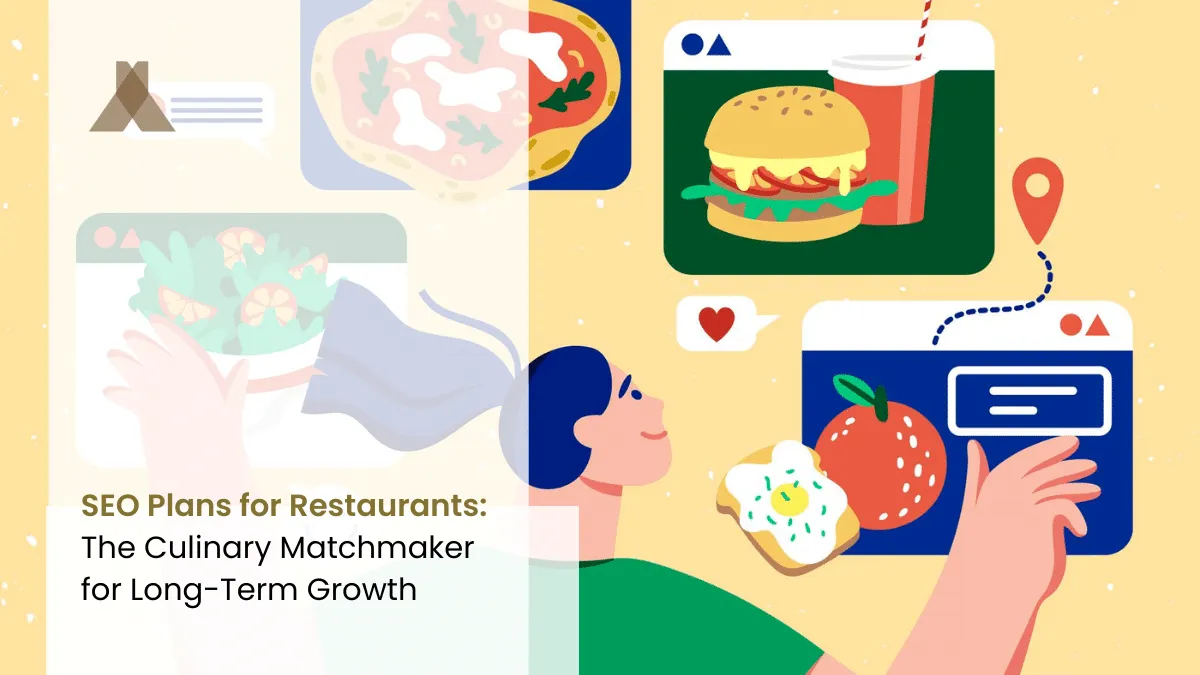
In the digital age, implementing a tailored strategy for SEO for restaurants is the ultimate matchmaker between a dining place and a potential hungry diner. They are the culinary cupid between specific cravings and good food.
Many times a diner has passed by their ideal restaurant, the one that would eventually become their go-to restaurant, their dream dinner, just because it didn’t show up on the first page of search engines when searching for local dining options.
But don’t worry, effective SEO for restaurants is here to the rescue. Here, we will break down the essential SEO principles and advanced tactics to finally get your restaurant and your diners to find each other.
Do Restaurants Really Need SEO?
It is well known that the restaurant industry is historically one of the most competitive. For this reason, and considering the digital world in which we live today, having a strong online presence is vital.
Today, users pull out their smartphones, search "best pizza near me" or "romantic dinner in Atlanta," and make a decision in less than three seconds. In fact, over 60% of diners choose a venue directly through the Google Local 3-Pack (the top 3 map results) without ever clicking through to a main website, converting immediately via "Get Directions" or "Call."
Therefore SEO for restaurants is not just another new marketing tool, it’s a necessity to get your product to the most people and attract more customers consistently. In other words, it’s the boost that every great place needs.
After all, it doesn’t matter how unique, authentic and delicious your food is if your site and local profiles don't reach your potential diners. And that’s why SEO functions as the culinary matchmaker of the digital age. All it seeks is for each restaurant to find its right diner and vice versa.
Understanding the 3 Local Ranking Pillars (and Search Intent)
First things first. There are a lot of services that can (and should) be brought together to optimize your restaurant website. But as far as SEO is concerned, the first efforts should go into optimizing your online presence for local search results.
In 2026 and heading into 2027, search algorithms rank local dining options based on three main pillars: Proximity, Relevance, and Prominence.
- Proximity: How close the hungry user is to your venue.
- Relevance: How precisely your menu and web content match the user's semantic search intent.
- Prominence: How popular, trusted, and authoritative your brand is across reviews, links, and mentions.
Of course, love and passion for food is something that transcends borders, but as much as we would like love does not have the power of teleportation. Not yet, at least.
So if we are in search of the ideal customer, let’s start by looking for the search intent of potential customers who will actually be able to come to our establishment. Our content is for them.
Our strategic goal is to maximize your Relevance and Prominence so Google expands your geographic Proximity radius on map searches.
In short, what marketing and mainly restaurant SEO is all about is understanding people, their cravings, concerns and needs. And that’s why the key to SEO is aligning content with search intent. Thus, performing meaningful keyword research to identify relevant search terms, such as dish-specific long-tail queries (e.g., "handmade pasta lunch deals" or "outdoor patio seating near me"), is essential to align content to user queries.
Keyword research is one of the pillars of On-Page SEO practices, but of course, there are always essential seasonings to boost the result. Therefore, pay attention also to the optimization of metatags, headings, URLs, structured data, and content. This will help you generate high-converting organic traffic.
10 Core Restaurant SEO Tips for 2026-2027
As we have seen, predicting diners’ cravings and focusing on the user experience (SXO - Search Experience Optimization) is what will position your restaurant as an authority in its niche.
Once ranked, the sky will be the limit. So let’s take a look at this essential tactics for building your SEO foundation:
1. Be Mobile-Friendly and Optimize Page Speed
Nowadays mobile devices are almost an extension of our hand, aren’t they? At the very least, it’s surely our go-to option for finding dining options.
That’s why, when designing your website, it’s essential to make sure it’s mobile-friendly and loads instantly. This helps not only the user experience but also meets Search Engine guidelines, since it allows you to indicate to search engines that the link is properly optimized.
Click-to-call buttons and quick menu links on mobile are non-negotiable.
2. Generate Keyword-Driven Content and Localized Pages
Having keyword-generated content on your site is a great way to start ranking. These words are where the search intentions of diners come into play.
This is crucial for solid On-Page SEO. Incorporating location-specific keywords throughout your website, such as the name of your city, neighborhood, or local landmarks, is key to effectively appearing in local searches.
Also, you can produce transactional content and direct them to online ordering, or produce content highlighting signature house items so that diners find in your menu just what they were looking for.
3. Optimize your Google Business Profile
A well-optimized Google Business Profile is a key step in optimizing your site and getting it to appear in local search results.
This acts as your digital front door and is the cornerstone of local SEO for restaurants. So make sure all information, such as contact details, opening hours, precise address, primary/secondary categories, and menu items, is accurate and up-to-date.
Avoid using generic categories like just "Restaurant": opt for specific primary categories (e.g., "Steak House" or "Italian Restaurant") following Google's official Business Profile guidelines. Equally important, leverage secondary categories (such as "Cocktail Bar", "Family Restaurant", or "Delivery Service") to capture broader local search traffic.
4. Convert Menus to Text Native Format (Stop Using PDF Images!)
One of the biggest mistakes restaurants make is embedding their menu as an image or a flat PDF file. Search engine crawlers struggle to extract rich semantic detail from static images.
Build your menu item-by-item using native HTML text on your website and direct GBP menu fields. Instead of listing just "Ribeye", describe it fully with ingredients and cooking method: "Prime Aged Ribeye Steak 500g, grilled over Argentine charcoal with house chimichurri." This semantic optimization allows search engines to match your venue when hungry users search for specific ingredients, cuts, or preparation styles.
5. Implement Schema.org Structured Data for AI & Generative Search
As AI-assisted search and rich results dominate search engines toward 2027, structured data markup (Schema.org) is mandatory. Implementing standard Schema.org Restaurant documentation (including Menu and MenuItem tags) translates your site structure directly into machine-readable AI language.
This allows search engines to output rich SERP badges including star ratings, price tiers, individual dish costs, and current table availability directly in search results.
6. Building Local Backlinks and Managing Citations
Authority doesn’t happen on its own, which is why getting backlinks from reputable websites is very important in this process to signal trust to search engines. Ensure strict NAP (Name, Address, Phone) consistency across platforms like Yelp, TripAdvisor, and local business directories.
Additionally, consider collaborating with influencers and food bloggers or local publications to generate buzz and drive authority to your website.
7. Simplify Online Ordering and Reservations
SEO for restaurants also thrives on empathy. Think of it this way, if you walk into a place to order your favorite food but it takes you too long to get it, the craving will quickly start to dwindle.
So put yourself in the customer’s shoes and make it easy to order online or make reservations from your website. This improves the user experience, reduces page exit rates, and therefore the probability of that first contact turning into a long-term relationship.
8. Manage Customer Reviews and Local Reputation
Online reviews are a primary prominence ranking signal for restaurant search engines. Search algorithms actively analyze the velocity, sentiment, and keywords inside customer reviews.
Encourage satisfied diners to leave Google reviews mentioning their favorite dishes. Always reply to reviews—both positive and negative—naturally including keyword context like your location or specialty items.
9. Leverage Visual Search & Geotagged Food Photography
Diners eat with their eyes first. Search engines increasingly lean on image recognition algorithms to serve visual search results on mobile maps.
Regularly upload high-resolution photos of your signature dishes, dining ambience, and menu items to your Google profile and website. Ensure image filenames are descriptive (e.g., wood-fired-neapolitan-pizza.jpg) and include optimized ALT text.
10. Optimize for Voice Search & Conversational Queries
With diners frequently using voice assistants while driving or on the move (e.g., "Where is the best late-night burger joint open right now?"), natural language optimization is vital.
Structure FAQ sections on your website addressing common customer questions about parking, dress code, gluten-free options, outdoor seating, and happy hour schedules.
These tips are key not only for your site to rank well, but also to increase diner satisfaction. Because that’s the goal: a new satisfied customer is potentially a regular customer.
Measuring Success: Key SEO Metrics for Restaurants
To evaluate the ROI of your SEO efforts, track performance metrics using tools like Google Search Console and Google Analytics 4:
- Organic Traffic Growth: Monitor how many visitors reach your site from search engines.
- Local Pack Impressions: Track how often your business profile appears in local map searches.
- Direct Actions: Measure calls, direction requests, and website clicks coming directly from your Google Business Profile.
- Conversion Rate: Track the number of completed online reservations and food orders generated organically.
Preparing for 2027: Visual Search, AI Overviews & SXO
The landscape of SEO for restaurants is evolving rapidly toward AI-driven discovery and visual-first interactions:
-
Generative Search & AI Summaries: Search engines now assemble synthesized answers for queries like "Where can I find cozy Italian places with vegan options?". Structured data ensures AI models parse your menu correctly.
-
Visual Search & Geotagged Photos: Diners often choose dishes based on images in Google Maps. Regularly upload high-resolution, original food photography with optimized file names and descriptive ALT tags.
-
Search Experience Optimization (SXO): Ranking #1 isn't enough if the menu page is slow or broken. The union between technical SEO and conversion-focused design ensures organic traffic turns into table reservations.
Conclusion: Restaurant SEO for Lasting Growth
SEO for restaurants, at its core, is all about turning potential diners into regular customers. In SEO lies the key for long-term and cost-effective business growth.
Executing a solid local search strategy is what allows any dining establishment to make all its gastronomic and operational efforts truly pay off.
While restaurant owners can implement many of these tactics independently, partnering with a specialized restaurant marketing agency ensures that technical Schema markup, review management, and local authority building are managed continuously.
So if you prefer to have experts handle it, explore our SEO & Google Business Profile Management Services for Restaurants.
Because if you don’t want to waste good food and time, SEO for restaurants (A.K.A, the culinary matchmaker) is the way to go.
Frequently Asked Questions (FAQs) About Restaurant SEO
How long does it take to see results from SEO for restaurants?
Initial local visibility improvements (such as appearing in map searches via Google Business Profile) can happen in 3 to 6 weeks. However, ranking organically for competitive local keywords like "best restaurant in Miami" usually takes between 3 to 6 months of continuous optimization.
Is Google Business Profile more important than a restaurant website?
Both complement each other. Google Business Profile captures high-intent customers looking for immediate local choices on Google Maps. However, a dedicated website builds authority, handles complex reservations, displays native rich menus, and ranks for long-tail search queries.
Why shouldn't restaurants use PDF menus for SEO?
Search engine bots struggle to analyze static image PDFs effectively. When menus are coded in native HTML and backed by MenuItem Schema markup, search engines can index each individual dish, ingredients, and prices, helping you rank for specific dish queries.
How do customer reviews impact local restaurant rankings?
Reviews are one of Google's strongest prominence signals. Algorithms factor in review velocity, overall star ratings, total volume, and specific keywords written by customers inside reviews (e.g., "best carbonara pasta").
Share this article
Keep reading
More from the journal.

Growth Marketing
·3 min read
The Operator’s Playbook: Bridging the Gap Between Restaurant Marketing and Kitchen Reality
Stop wasting ad spend on generic agencies. Discover Resto Experience, a data-driven restaurant marketing agency built by real operators to scale table volume.
Growth Marketing
·4 min read
How Restaurant Marketing Campaigns Actually Drive Growth
Stop juggling fragmented vendors. Learn how an integrated restaurant marketing system drives predictable, scalable revenue for multi-location brands.
Growth Marketing
·3 min read
Marketing System for Restaurants: The Resto Experience Approach
At Resto Experience, restaurant growth is not treated as a collection of disconnected tactics, it is built as a structured ecosystem.